Many aspiring chefs begin with instinct. They understand flavour, enjoy experimentation, and feel comfortable in the kitchen.
What separates enthusiasm from mastery is refinement. Precision does not emerge from passion alone. It develops through correction, repetition, and structured practice.
Malaysia’s chef academies aim to provide that very structure.
Within these environments, students move beyond recreating dishes. They learn to execute with control, consistency, and awareness. Perfecting craft becomes a deliberate process instead of a hopeful outcome.
This article explores how focused kitchen training sharpens technique, strengthens discipline, and prepares aspiring chefs for professional standards.
Key Takeaways
- Perfecting culinary craft requires structured repetition, guided correction, and measurable refinement.
- Chef academies help transform instinctive cooking into controlled technical execution.
- Immediate instructor feedback accelerates skill development and prevents long-term bad habits.
- Simulated service conditions build composure, timing awareness, and station discipline.
- Confidence in the kitchen comes from methodical practice that makes execution reliable.
Turning Instinct Into Technical Control
Early cooking relies on intuition. A chef academy introduces measurement and method to that intuition.
Students begin by refining foundational skills:
- Knife precision
Cuts are practised for uniformity and efficiency. Accuracy improves heat distribution and presentation.
- Heat management
Students learn to read flame intensity, oven behaviour, and pan response. Control replaces guesswork.
- Timing discipline
Multiple components are executed within defined windows. Sequencing becomes intentional.
Through repetition, muscle memory forms. Movements become deliberate. Control replaces approximation.
The Role of Immediate Correction
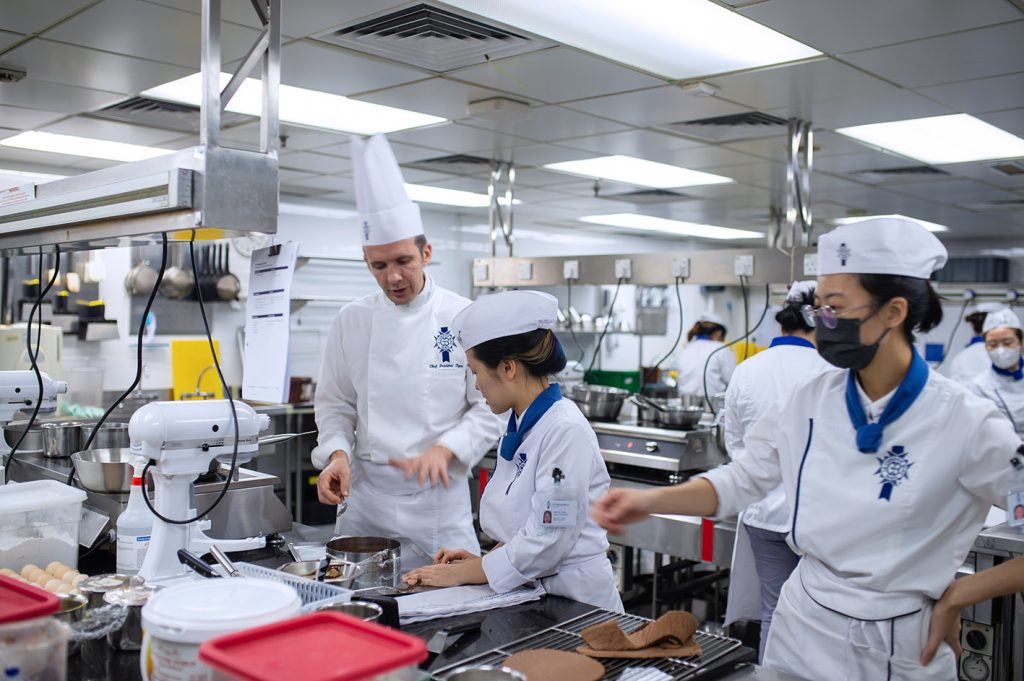
One of the most valuable aspects of academy training is real-time feedback.
Instructors observe posture, technique, and workflow continuously. Small adjustments are made early before they develop into long-term habits.
Students experience:
- Direct technical correction
Instructors adjust grip, stance, and motion to improve efficiency and reduce waste.
- Refinement of plating standards
Presentation is reviewed for balance and alignment with established benchmarks.
- Method verification
Students are asked to explain their process. This reinforces understanding rather than rote execution.
Correction accelerates growth. It shortens the gap between attempt and mastery.
Mastering Timing Within Service Conditions
Cooking well in isolation is largely different from cooking within coordinated service. Chef academies simulate realistic kitchen conditions to build readiness for actual restaurant services.
Training includes:
- Station rotation
Students work different sections to understand the broader workflow of a real-time kitchen.
- Coordinated dish release
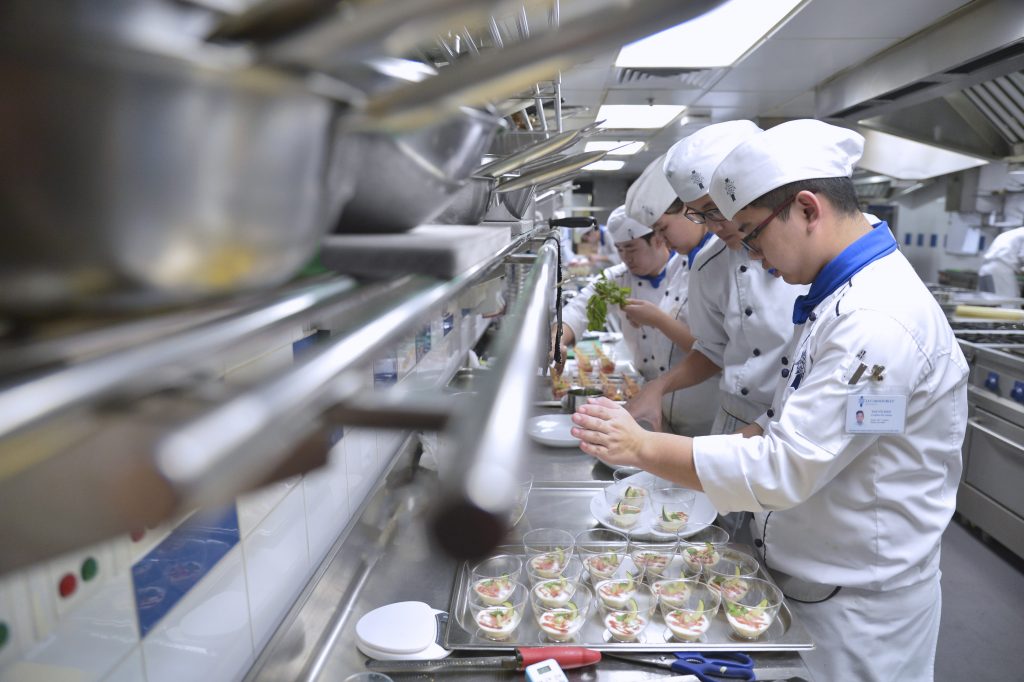
Timing across components is synchronised to ensure cohesion, coming together on time to complete individual dishes.
- Clean-down discipline
Organisation is maintained even during peak periods. Stations are kept tidy even while working under pressure.
These exercises build composure. Students learn to think while moving. Awareness expands beyond the individual task.
Repetition as the Foundation of Craft
Perfecting craft requires returning to the same technique multiple times. Each iteration reveals nuance.
In academy environments:
- Sauces are prepared repeatedly until texture stabilises.
- Students refine reduction speed, emulsification control, and seasoning balance.
- Subtle shifts in heat or whisking technique are corrected until the sauce holds structure and flavour consistently.
- Proteins are cooked to precise doneness under observation.
- Instructors assess surface colour, internal temperature, and resting technique.
- Students learn to read visual and tactile cues instead of relying solely on timing, even learning to identify the temperature of meat via touch.
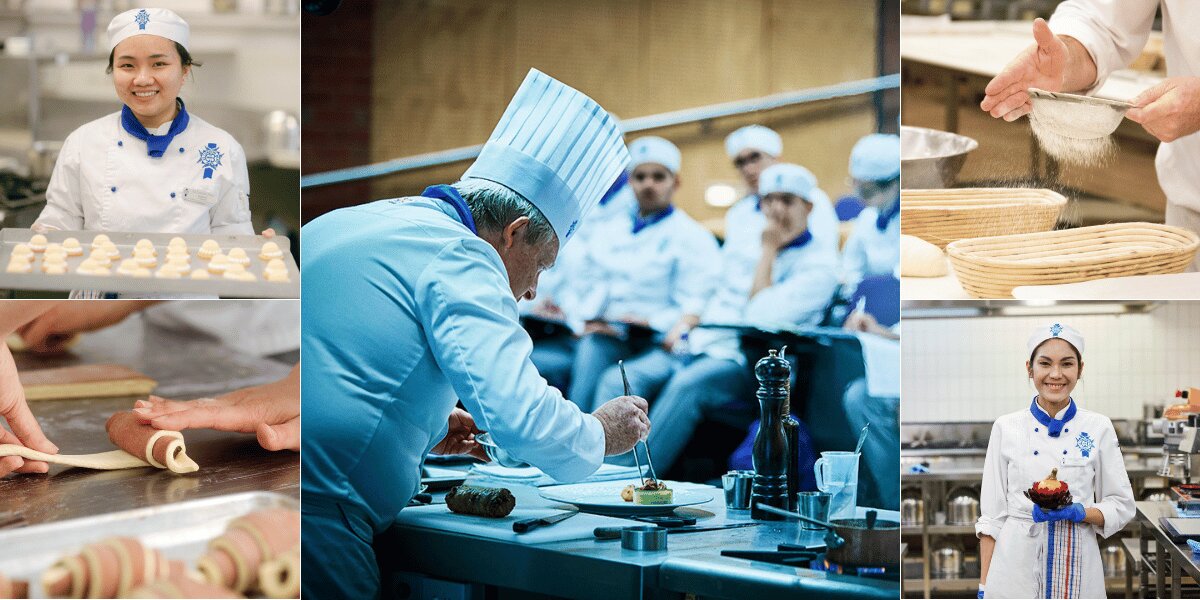
- Pastry elements are measured and adjusted for consistency.
- Dough elasticity, lamination thickness, and bake response are reviewed closely.
- Small inaccuracies are identified so students understand how precision affects final structure and texture.
Craft develops through refinement while repetition exposes variation. Students begin to recognise small deviations in temperature, timing, and texture. That recognition sharpens judgment.
Confidence in the Kitchen Built Through Execution
As techniques stabilise, confidence shifts from assumption to evidence. Students no longer hope a dish will succeed. They understand why it will be after having mastered the mechanics behind the desred results.
This confidence appears in:
- Steady movements during service simulations
Students prepare components without hesitation because they trust their method and sequence.
- Composed responses to adjustments
When an ingredient changes or timing shifts, they adapt without losing control of the dish.
- Clear communication with peers
Confidence supports direct, focused exchanges that keep workflow efficient during coordinated tasks.
Execution becomes dependable. That dependability indicates readiness for professional kitchens.
Institutions such as Le Cordon Bleu Sunway exemplify this approach by combining structured repetition with experienced instruction. Training is designed to strengthen both technical skill and kitchen awareness, allowing aspiring chefs to refine their craft within a disciplined setting.
Craft as a Deliberate Process in the Right Environment
Perfecting craft is not a moment of inspiration. It is the result of guided repetition, careful correction, and consistent evaluation.
Chef academies in Malaysia like Le Cordon Bleu Sunway provide the exact environment where aspiring chefs can refine their techniques methodically while developing the habits that support long-term growth in the industry.
If you are ready to move from instinct to precision, talk to us today to explore how structured kitchen training can elevate your craft to the next level.