Before a chef prepares complex dishes or develops signature menus, they learn how to handle a knife.
Knife skills form one of the earliest and most essential disciplines in culinary training because they directly influence speed, safety, and ingredient control in the kitchen.
Professional kitchens depend on precision. Vegetables must cook evenly, proteins must be portioned accurately, and garnishes must maintain a consistent appearance across plates. All of this begins with good knife work.
For aspiring chefs, mastering knife skills is less about cutting quickly and more about developing precision and consistency. Through structured training and repetition, students learn how proper knife techniques improve efficiency and elevate the quality of their cooking.
Key Takeaways
- Knife skills form one of the first technical foundations aspiring chefs develop because precise cutting affects cooking consistency, safety, and kitchen efficiency.
- Proper knife grip and guiding hand technique provide stability and control, allowing chefs to maintain accuracy during long preparation sessions.
- Classic cuts such as julienne, brunoise, batonnet, and chiffonade help ingredients cook evenly and support clean, professional presentation.
- Knife work also extends to proteins, where trimming, portioning, and filleting ensure ingredients are prepared efficiently with minimal waste.
- Culinary academies train knife skills through demonstrations, repetition, and instructor feedback so students build confidence and precision in real kitchen environments.
The Foundation of Knife Skills: Proper Grip and Control
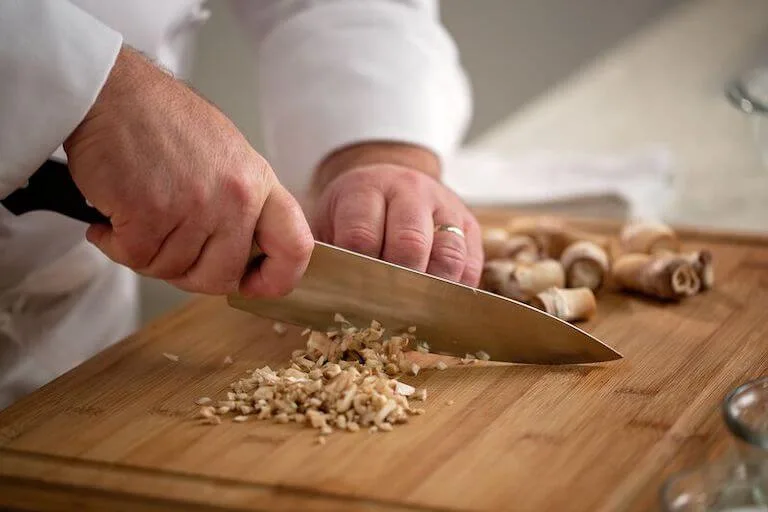
Professional knife skills for cooking begin with how the knife is held and guided. Without correct grip and hand positioning, even simple cuts become difficult to execute accurately.
Aspiring chefs are first taught the fundamentals of knife control:
- Pinch grip for stability
- The thumb and index finger hold the blade just above the handle while the remaining fingers wrap around the handle.
- This grip improves balance and allows the chef to guide the blade with greater precision.
- Guiding hand technique
- The non-cutting hand forms a curved position that protects fingertips while guiding the knife along the ingredient.
- This method ensures consistent thickness and reduces the risk of injury.
- Blade contact with the cutting board
- Many professional cuts rely on a rocking motion where the knife tip remains near the board while the blade moves through the ingredient.
- This technique allows smoother movement and faster preparation.
These foundational habits allow chefs to maintain control throughout long sessions of prep work.
Essential Vegetable Cuts Every Aspiring Chef Learns
Professional kitchens rely on uniform cuts to ensure ingredients cook evenly and present cleanly on the plate. Culinary students must practise and master several classic vegetable cuts that appear regularly in recipes.
Common cuts include:
- Julienne
- Thin matchstick-shaped cuts used for vegetables such as carrots, bell peppers, and zucchini.
- Julienne vegetables cook quickly and are typically used in salads, stir-fries, or garnishes.
- Brunoise
- Very small cubes created by first julienning vegetables and then dicing them finely.
- Brunoise cuts are used in sauces, soups, and delicate garnishes where subtle texture is important.
- Batonnet
- Rectangular sticks that are larger than julienne.
- This cut is commonly used for vegetables served as side dishes or for preparing uniform French fries.
- Paysanne
- Thin flat pieces cut into shapes that follow the natural form of the vegetable.
- This rustic style is frequently used in soups and stews.
- Chiffonade
- A technique used for leafy herbs or greens such as basil and spinach.
- Leaves are stacked, rolled, and sliced into thin ribbons, preserving colour and aroma.
Through repetition, students learn how consistent knife work improves both cooking results and presentation.
Precision Knife Work for Proteins and Seafood
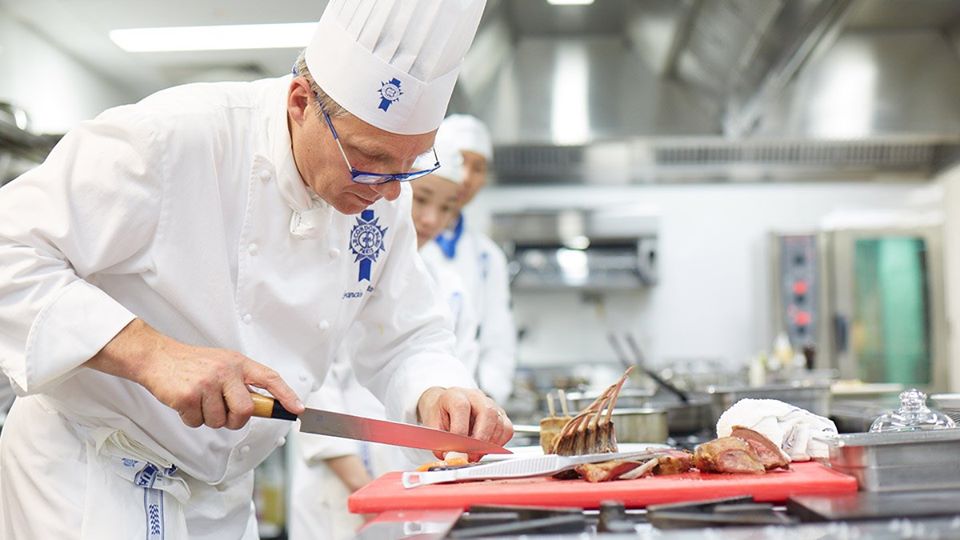
Knife skills are important not just for vegetables. Chefs must also handle proteins with accuracy to maintain quality and reduce waste.
Important techniques include:
- Trimming meat
- Removing excess fat, sinew, and connective tissue improves texture and ensures the protein cooks evenly.
- Portioning cuts
- Consistent portion sizes allow dishes to cook at the same rate and maintain presentation standards in service.
- Filleting fish
- Proper filleting separates flesh from bone while preserving the natural form of the fish.
- Deboning poultry
- Removing bones cleanly allows chefs to prepare specific cuts or create stuffed dishes.
These skills require patience and practice. Proper technique ensures that valuable ingredients are handled efficiently.
Speed Comes From Consistency
Many aspiring chefs associate knife skills with speed. In commercial kitchens, speed develops naturally once accuracy and consistency are established.
Uniform cuts allow ingredients to cook evenly. This reduces the need for constant adjustments during cooking. Efficient movement also prevents fatigue during long preparation periods.
Students learn to maintain a steady rhythm while cutting that will beat rushing through tasks any day. With repetition, muscle memory develops and speed increases without sacrificing control.
How Culinary Schools Train Knife Skills
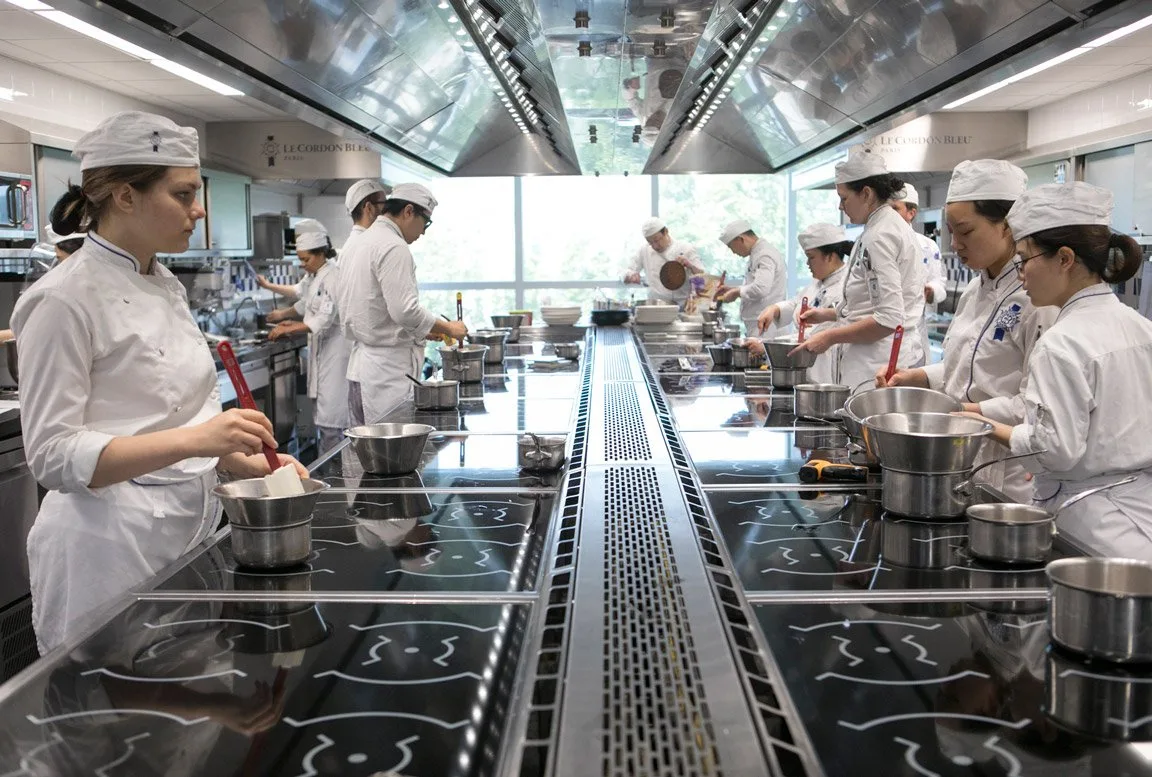
Knife skills are among the first practical abilities taught in culinary education. Training environments allow students to practise under supervision while developing safe and efficient techniques.
Instructors typically guide students through:
- Demonstrations of professional cutting techniques
- Students observe how chefs position their hands, move the blade, and control ingredients during preparation.
- Hands-on repetition
- Exercises allow students to practise vegetable cuts and portioning skills until movements become consistent and natural.
- Instructor feedback and correction
- Small adjustments in grip, posture, or knife angle can significantly improve accuracy.
- Working with professional kitchen equipment
- Students learn to handle chef knives and maintain them through sharpening and proper storage.
Institutions such as Le Cordon Bleu Sunway integrate these practices into our culinary programmes, helping aspiring chefs build the technical foundation required in kitchens around the world.
Master The Skill That Shapes Every Kitchen Task
Knife skills influence nearly every stage of food preparation. From vegetable cutting to protein portioning, precise knife work is key to maintaining efficiency, consistency, and quality in professional kitchens.
Aspiring chefs who invest time in mastering these techniques develop greater control over ingredients and cooking outcomes. With practice and guidance, knife work gradually becomes second nature to any seasoned chef.
For those interested in building strong culinary foundations, contact us at Le Cordon Bleu Sunway to explore our globally recognised programmes, cooking classes, workshops, and more.