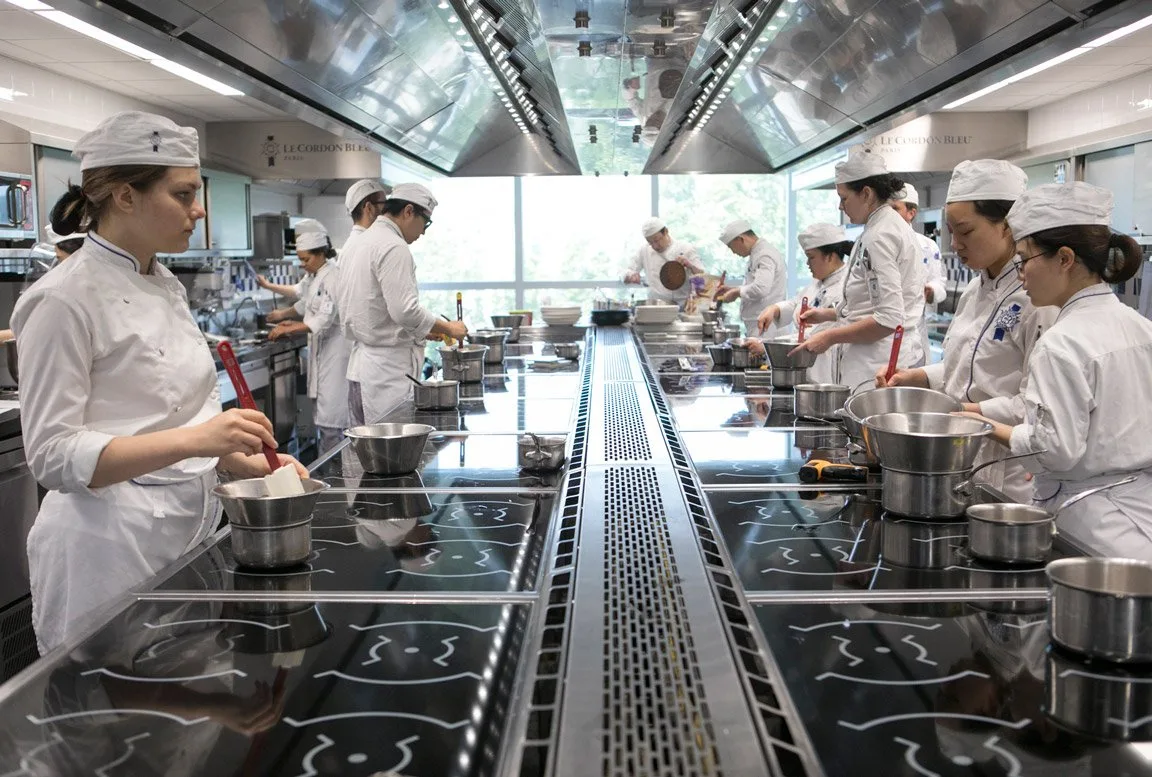

The professional kitchen has a culture problem, and the industry is finally beginning to address it honestly. For decades, extreme stress, long hours, hierarchical pressure, and high burnout rates were treated as tests of character rather than symptoms of a systemic issue. The logic went: if you cannot handle the heat, you do not belong. This logic produced skilled chefs and it also produced an industry with disproportionately high rates of mental health difficulties, substance dependency, and early career exits.
The conversation has shifted. Chefs with global profiles have spoken publicly about anxiety, depression, and the cost of high-pressure careers. The industry is reconsidering what excellence actually requires, and what it should cost the people delivering it. For culinary students entering the profession today, understanding the mental demands of kitchen work and developing deliberate strategies for managing them is as important as any technical skill.
What Makes Professional Kitchens Uniquely Demanding
Professional kitchens combine several distinct stress factors that are individually challenging and, together, create a working environment unlike almost any other.
Physical Intensity
Kitchen work involves sustained standing, working in high ambient heat, lifting heavy equipment, and continuous movement for shifts that often run ten hours or more. Physical exhaustion and mental acuity are not separate systems. As the body tires, concentration degrades, decision-making slows, and the risk of errors and injuries increases.
Time Pressure
During service, timing is binary. Each dish must arrive ready at precisely the right moment. A sauce that finishes two minutes before the protein loses texture and gloss. A plate that arrives thirty seconds late will be cold. There is no pausing the clock to reconsider, and the consequences of timing failures are immediate, visible, and public within the kitchen hierarchy.
The Brigade Structure
The kitchen brigade system is effective as an organisational structure and challenging as a psychological environment. Criticism flows downward, sometimes sharply, often in front of colleagues, under time pressure, without the feedback structures that exist in most other professional settings. Learning to receive direct, unsoftened critique as professional information rather than personal judgment is a skill that takes deliberate development and does not come naturally to most people.
Irregular Hours and Social Isolation
Kitchens operate when most other people are resting or celebrating: evenings, weekends, public holidays. The relationships this schedule makes difficult to maintain, with friends, family, and the broader social world outside the kitchen, represent a genuine and underappreciated cost of the career. Social isolation accumulates quietly and its effects on mental health are well-documented.
Recognising Burnout Before It Becomes a Crisis
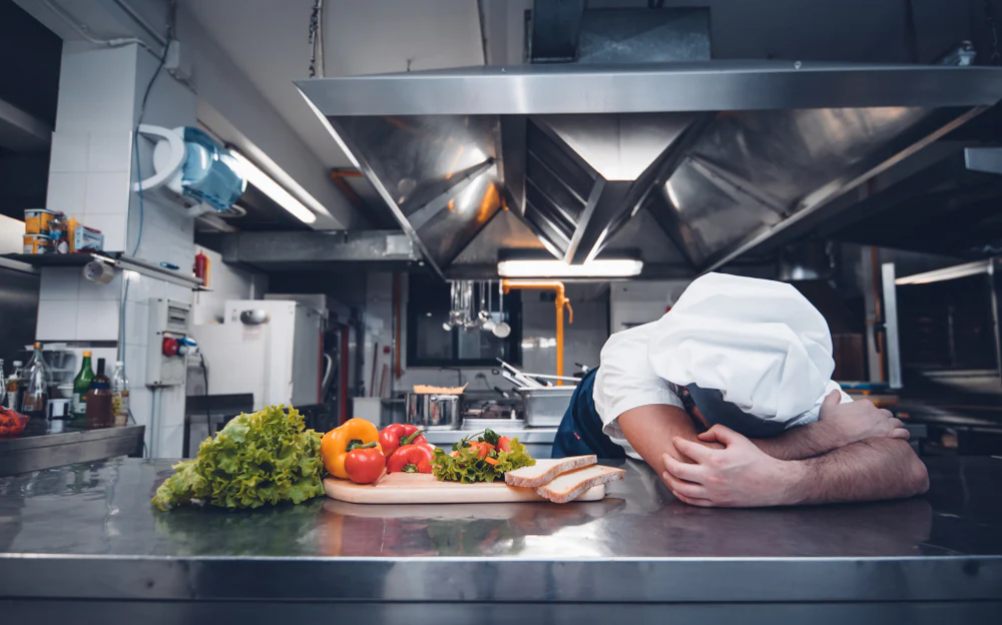
Burnout is not a sudden event. It builds through the accumulation of unmanaged stress, insufficient recovery, and a sustained mismatch between the demands placed on a person and the resources available to meet them. It is particularly difficult to recognise in an industry culture that treats endurance as a virtue and complaints of exhaustion as weakness.
Early signs that are worth taking seriously include:
- A loss of enthusiasm for food and cooking that persists beyond the end of a difficult week
- A shift from creative engagement to purely mechanical execution, going through the motions without investment
- Increasing cynicism about the industry, the workplace, or colleagues
- Difficulty concentrating during service, particularly on tasks that previously felt automatic
- Physical fatigue that does not resolve with normal rest or time off
- A growing reluctance to go to work that is qualitatively different from ordinary tiredness
These signs are easy to dismiss in a culture that normalises exhaustion. Recognising the difference between the ordinary tiredness after a demanding service and the deeper depletion of genuine burnout requires self-awareness and a willingness to be honest about what is actually happening.
Building Resilience: What the Evidence Supports
Resilience in this context does not mean the ability to endure more. It means the capacity to sustain high performance over time while maintaining mental and physical health. It is built through deliberate habits and structural decisions, not through willpower alone.
Recovery Outside the Kitchen
Sleep is the most powerful recovery tool available and the most consistently sacrificed in kitchen cultures that treat late finishes and early starts as demonstrations of commitment. Sleep deprivation impairs reaction time, emotional regulation, creative thinking, and immune function. Treating adequate sleep as a performance strategy rather than a luxury is not a soft position. It is the evidence-based one.
Physical Activity That Contrasts With Kitchen Work
Movement that is different from standing and working in a hot kitchen supports recovery in ways that rest alone does not. Swimming, cycling, yoga, or any activity that addresses the postural demands of kitchen work, strengthening the core and releasing upper back tension, makes sustained physical performance over a long career significantly more achievable.
Psychological Detachment During Time Off
The capacity to genuinely disengage from work-related thinking during time away from the kitchen is a researched and validated component of occupational resilience. For people who love their craft, this is genuinely difficult. Food, flavour, and technique tend to occupy the minds of committed cooks even when they are not cooking. The ability to be fully present in non-work time is a skill that benefits from deliberate practice.
Relationships and Professional Community
Trusted relationships with mentors, peers, and supportive colleagues provide the social foundation that sustains people through difficult periods in any career. In kitchens, where the culture has not historically been psychologically safe, having even one trusted colleague or mentor with whom an honest conversation is possible represents significant protection against the isolation that burnout thrives in.
The Role of Leadership in Kitchen Culture
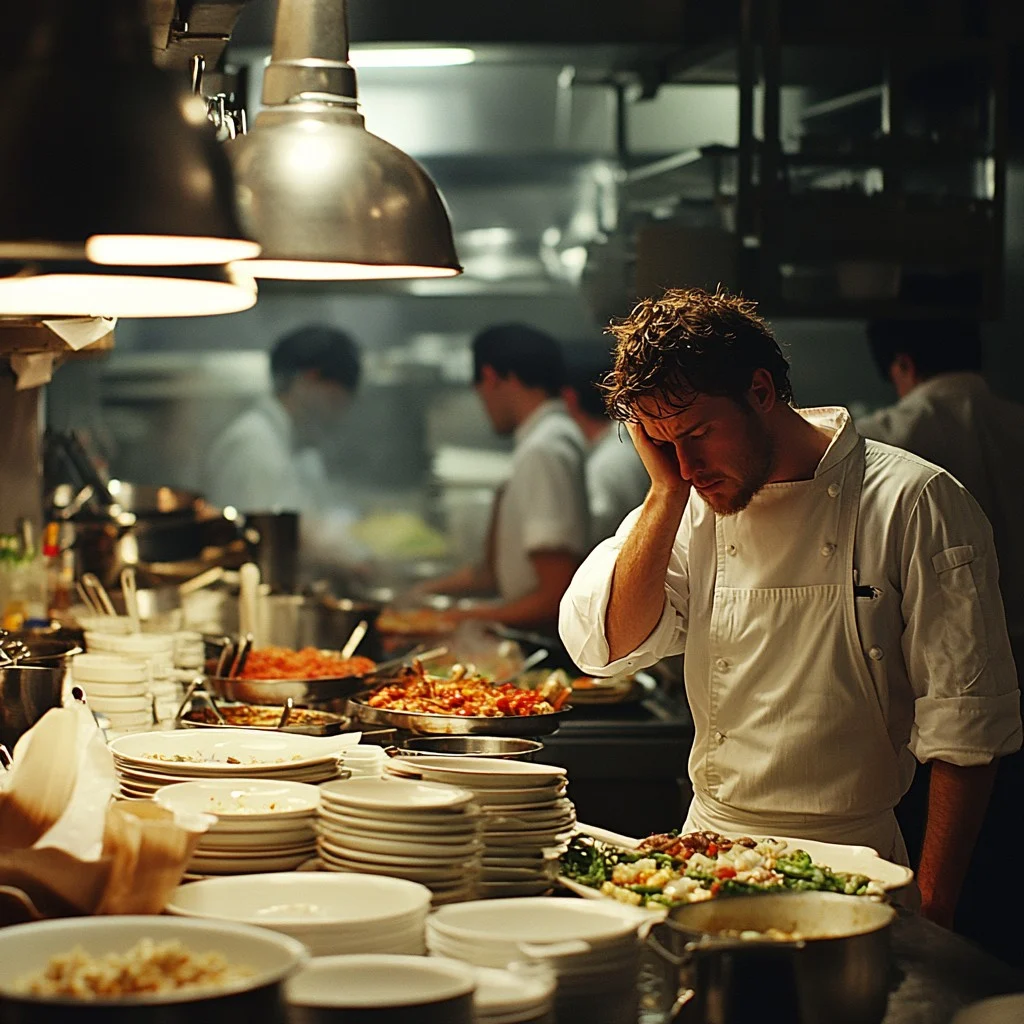
Individual resilience strategies matter, but they operate within a culture created by whoever leads the kitchen. Chef-owners and head chefs who model sustainable professional behaviour, manage with clear communication, address problems directly rather than through escalating pressure, and treat junior cooks as people rather than production units build kitchens where resilience is much easier to maintain.
There is essentially no evidence that fear-based, high-pressure kitchen cultures produce better food. What they reliably produce is high staff turnover, inconsistent teams, and a narrowing of the talent pool as people who might thrive in a healthier environment choose not to enter the industry at all.
Kitchens that operate with psychological safety, where staff feel able to ask questions, flag problems, and make mistakes without humiliation, produce more consistent results over time because they retain skilled people and allow them to develop fully. This is not about lowering standards. The genuine demands of professional cooking are high and should be. It is about separating those real demands from cultural habits that add unnecessary suffering without improving the food.
What Culinary Education Can Do
Culinary school is where professional habits, expectations, and identity begin to form. Schools that address the mental demands of kitchen work explicitly, that teach stress management as a professional skill alongside knife skills and sauce technique, that model constructive feedback cultures in their own teaching kitchens, are preparing graduates more completely for the careers they are entering.
Students who arrive in professional kitchens knowing what burnout looks like, equipped with strategies for managing stress proactively, and with an understanding of what sustainable high performance requires, are better positioned to build long careers. They are also better positioned, when the time comes, to lead kitchens that other talented people want to work in.
The food industry needs people with long careers and genuine craft. That requires caring about the conditions under which those careers are lived, starting in the first year of training.