Choosing the right pastry school in Malaysia is one of the most important decisions an aspiring pastry chef will make, and it deserves more than a quick scroll through Google results.
Hotels, patisseries and cafés are actively looking for trained professionals to fill their kitchens, but only the right programme gets you there.
But with so many programmes out there, knowing which school is worth your time and money takes more than just scrolling through brochures. This guide breaks down everything from accreditation standards set by the Malaysian Qualifications Agency to funding options available through HRD Corp so you can make a decision you’re confident in.
What You Will Learn From This Guide
- How to compare pastry programmes based on accreditation, facilities, internship opportunities and international recognition before enrolling.
- The realistic cost range for pastry education in Malaysia, from short courses costing hundreds of ringgit to full diplomas reaching tens of thousands.
- Career pathways and typical starting roles for pastry graduates in Malaysian hotels, bakeries, cafés and catering businesses.
- Key differences between short certificate courses, diplomas, advanced diplomas and degree programmes in pastry and baking.
- How international students can access pastry education in Malaysia, including visa requirements and work rights during study.
Introduction: Why Pastry Education Matters in Malaysia
You already know Malaysia’s food scene is something special, but turning that passion into a career takes more than talent. Whether you’re a fresh SPM grad weighing your options, a working adult considering a career switch, or a parent researching the best path for your child, the Malaysian pastry industry is actively hiring trained professionals right now. Hotels, boutique patisseries and catering businesses across KL, Penang and beyond are filling pastry roles every month and the right school makes all the difference in how quickly you get there.
The Department of Statistics Malaysia (DOSM) records thousands of restaurants and food service businesses nationwide, offering pastry graduates employment across retail chains, boutique patisseries and hotel kitchens. This guide equips you with the knowledge to select the right pastry school Malaysia programme, understand realistic costs and career outcomes, and navigate entry requirements whether you are a local or international student.
Pastry and Baking Education in Malaysia: Key Statistics
- The Department of Skills Development (JPK) under Malaysia’s Ministry of Human Resources incorporates culinary and bakery programmes into the National Occupational Skills Standards (NOSS), defining competency-based training outcomes for pastry occupations.
- Taylor’s University reports that its Advanced Diploma in Patisserie and Gastronomic Cuisine includes structured international internship placements at top restaurants, reflecting strong industry integration for Malaysian pastry students.
- UCSI University states that its Diploma in Culinary Arts covers pastry and bakery modules alongside culinary essentials, food hygiene and restaurant operations, preparing graduates for roles such as pastry chef or food stylist.
- The Malaysian Qualifications Agency (MQA) explains that accredited culinary and pastry programmes must meet standards for curriculum design, assessment and staff qualifications, ensuring consistent quality across public and private institutions.
- HRD Corp identifies hospitality and food services as priority sectors for skills upgrading, with funding available for employer-sponsored training in baking and pastry.
- The Malaysian Association of Hotels (MAH) highlights that major hotels typically operate multiple food and beverage outlets including bakeries and patisseries, creating employment opportunities for pastry graduates in hotel kitchens and banquet operations.
- Tourism Malaysia reports that the country attracts millions of international visitors for food-related experiences, and gastronomy is a core part of Malaysia’s tourism branding, supporting demand for skilled pastry and culinary professionals.
Types of Pastry and Baking Programmes Available in Malaysia
Pastry education in Malaysia spans short courses, certificates, diplomas, advanced diplomas and degree programmes, each serving different career goals and time commitments.
Short Courses
Typically run from one day to a few weeks, covering specific techniques such as cake decorating, bread baking or chocolate work. Cost ranges from a few hundred to several thousand ringgit depending on duration and instructor credentials.
Certificate Programmes
Usually last three to six months and provide foundational skills in baking, pastry basics and kitchen safety, often with flexible entry requirements.
Diploma Programmes
A culinary arts diploma typically requires SPM or equivalent, spans two to three years full-time, and combines classroom theory with extensive kitchen lab hours and industry internships.
Advanced Diplomas and Bachelor’s Degrees
These add management, food science and entrepreneurship modules, preparing graduates for supervisory roles or business ownership. Degree programmes may also include research projects, food product development and advanced culinary techniques, extending study duration to three or four years.
How to Choose the Right Pastry School in Malaysia
Selecting the best pastry school depends on comparing accreditation, teaching staff credentials, facilities, internship networks and graduate employment outcomes. MQA accreditation ensures that a programme meets national quality standards, which matters for further study and professional recognition.
- Instructor credentials – Check whether instructors hold recognised pastry qualifications and active industry experience, as chef-instructors with real-world expertise provide practical insights and networking opportunities.
- Campus facilities – Inspect the size of pastry kitchens, equipment quality and whether students work on professional-grade ovens, mixers and blast chillers.
- Internship placements – Ask whether the school has partnerships with hotels, patisseries or catering companies, how long the internship component is, and whether students complete it locally or internationally.
- Graduate outcomes – Request data on employment rates, typical starting roles and salary ranges to gauge the programme’s real-world value.

Accreditation and International Recognition: What to Look For
Accreditation by the Malaysian Qualifications Agency (MQA) confirms that a pastry programme meets national curriculum, assessment and staffing standards, and qualifications appear on the Malaysian Qualifications Register (MQR). Internationally recognised schools such as Le Cordon Bleu operate under global brand standards, offering qualifications that are understood and respected by employers worldwide.
Le Cordon Bleu International states that its graduates are sought after due to the recognition of the superior quality of their training. If you plan to work abroad or pursue further study overseas, confirm whether your Malaysian pastry qualification has articulation agreements with institutions in Australia, the United Kingdom or France. Some schools offer dual awards or pathways that credit Malaysian study towards foreign degrees, reducing time and cost for international advancement.
Comparison of Pastry Programme Types in Malaysia
Programme Type | Typical Duration | Entry Requirement | Estimated Cost Range (MYR) | Best For |
Short Course | 1 day – 4 weeks | None or minimal | 300 – 5,000 | Hobbyists, skill top-ups |
Certificate | 3 – 6 months | SPM or lower, flexible | 3,000 – 10,000 | Beginners, career changers |
Diploma | 2 – 3 years | SPM or equivalent | 30,000 – 80,000 | Career-focused students |
Advanced Diploma | 1 – 2 years (post-Diploma) | Diploma in related field | 20,000 – 50,000 | Specialisation, progression |
Bachelor’s Degree | 3 – 4 years | STPM, A-Level or Diploma | 50,000 – 120,000 | Management, research, entrepreneurship |
Realistic Costs and Financial Planning for Pastry School
Tuition fees for a full-time diploma in pastry or culinary arts at private institutions in Malaysia typically range from RM30,000 to RM80,000, depending on the school’s reputation, campus facilities and programme duration.
Beyond tuition, budget for the following:
- Uniforms, knife kits and tools – typically RM2,000 to RM5,000
- Ingredient or material fees – some schools charge these per semester
- Accommodation, food and transport – RM1,000 to RM2,500 per month in urban areas such as Kuala Lumpur or Subang Jaya
- International student costs – visa application fees, medical insurance, return flights and on-campus housing where required
HRD Corp offers training grants for employer-sponsored students, and some schools provide merit scholarships or installment plans to ease upfront costs. Research all available funding before committing, and ensure you have contingency savings for unexpected expenses during your studies.
Career Pathways and Job Roles After Pastry School
Graduates of pastry programmes in Malaysia typically start in entry-level roles such as commis pastry chef or bakery assistant, working in hotel pastry kitchens, retail bakeries or catering companies.
Entry-level salaries: RM1,800 to RM2,800 per month
With two to four years of experience, pastry chefs can progress to chef de partie or demi chef roles:
Mid-level salaries: RM2,500 to RM4,500 per month
Senior and executive pastry chefs in luxury hotels or large operations may command:
Senior-level salaries: RM5,000 to RM10,000 or more
Alternative pathways include specialising as a chocolatier, sugar artist, food stylist or recipe developer. Some graduates eventually open a home-based or commercial bakery, though entrepreneurship requires careful business planning, start-up capital and regulatory compliance.
International Students: Visa, Work Rights and Support Services
International students can enrol in accredited pastry and culinary programmes in Malaysia by obtaining a student visa, which requires:
- An offer letter from an MQA-accredited institution
- Proof of financial capacity
- Medical screening
- Valid travel documents
Processing typically takes four to eight weeks through Education Malaysia Global Services (EMGS). Student visa holders are generally permitted to work part-time up to 20 hours per week during term breaks and semester holidays, subject to approval from the Immigration Department of Malaysia.
Most private institutions offer international student support services including airport pickup, orientation, accommodation assistance and English language bridging courses for students who do not meet direct entry proficiency requirements.
Common Misconceptions About Studying Pastry in Malaysia
Myth: Pastry school is only for people who want to work in hotels.
Reality: Pastry graduates work in diverse settings including retail bakeries, catering businesses, food manufacturing, test kitchens and media production. The DOSM records thousands of food service businesses nationwide, offering far more employment options beyond the hotel sector.
Myth: You need years of baking experience before enrolling in a diploma programme.
Reality: Most diploma programmes require only SPM or equivalent academic qualifications, and no prior baking experience is necessary. Schools design curricula to take beginners from foundational skills through to advanced techniques over the course duration.
Myth: Pastry qualifications from Malaysia are not recognised overseas.
Reality: MQA-accredited programmes meet national quality standards, and schools with international affiliations or dual awards offer qualifications recognised in multiple countries. Le Cordon Bleu International confirms that its graduates are sought after globally due to standardised training quality across all campuses.

A Week in the Life of a Pastry Student in Malaysia
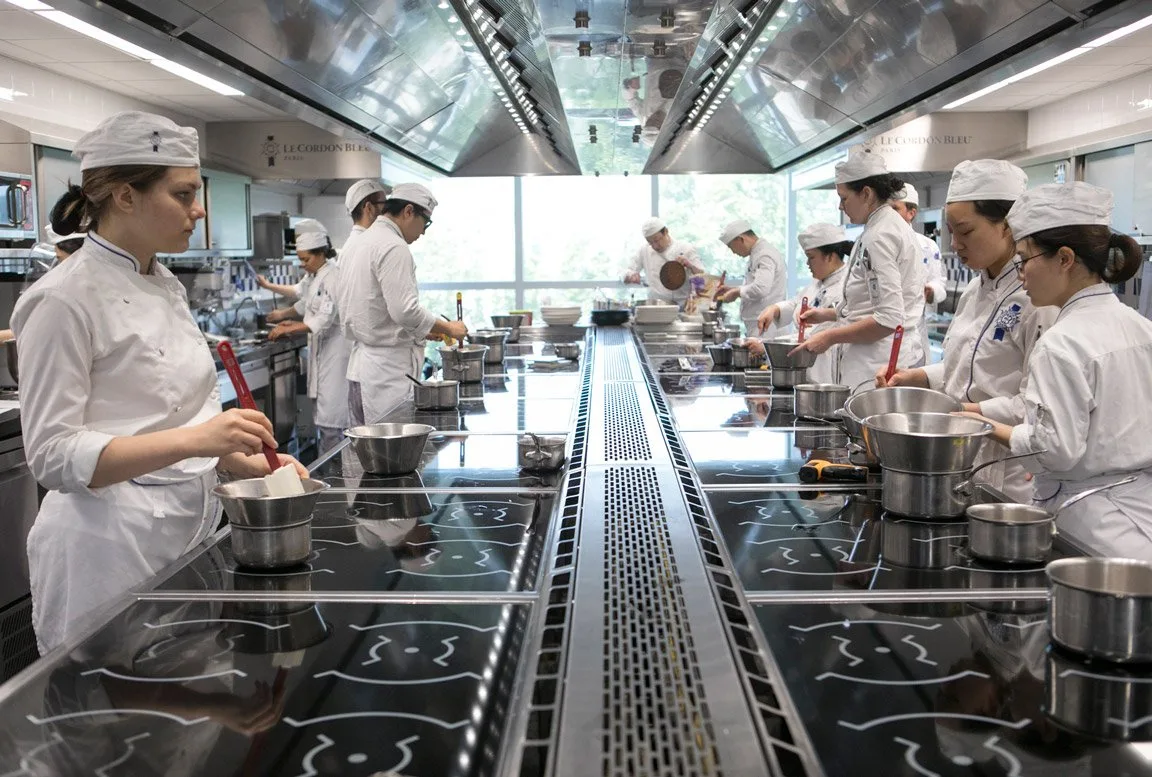
Life as a pastry student at Le Cordon Bleu is structured around one core principle: learning by doing. Each week blends hands-on kitchen practice with classroom theory, building the technical foundation and professional discipline that Malaysia’s hospitality industry expects.
In the kitchen, students work through classical French pastry techniques under internationally trained chef-instructors, progressing through disciplines such as bread, entremets, plated desserts and sugar artistry.
What students consistently find is that pastry at this level goes beyond following recipes. It is about understanding why techniques work, how to adapt under pressure and how to meet professional kitchen standards every single day.
Checklist: Questions to Ask Before Enrolling in Pastry School
Not every pastry programme in Malaysia is built the same way. Before committing, it is worth asking the right questions. Le Cordon Bleu is one institution that addresses all of the points below, though any school you seriously consider should be able to answer them clearly.
- Is the programme accredited by the Malaysian Qualifications Agency (MQA) and listed on the Malaysian Qualifications Register (MQR)?
- What are the qualifications and industry experience of the chef-instructors teaching pastry modules?
- How many hours per week are dedicated to hands-on kitchen practice versus classroom theory?
- Does the programme include a compulsory internship component, and where do students typically complete placements?
- What is the student-to-instructor ratio in practical kitchen sessions, and how many students share each workstation?
- Are ingredient costs, uniforms and tools included in tuition, or do they incur additional fees?
- What is the graduate employment rate, and what are the most common job roles and starting salaries for recent alumni?
- Does the school offer articulation pathways or credit transfer agreements with overseas institutions for further study?
- What scholarships, payment plans or external funding options are available to reduce upfront costs?
- For international students, what visa support, accommodation assistance and English language bridging programmes does the school provide?
Real-World Use Case: From Diploma to Hotel Pastry Kitchen
A graduate of our Diplôme de Pâtisserie completed an industry internship at a five-star hotel pastry section, applying classical French techniques to production schedules, large-batch baking and banquet plating. Upon graduation, the hotel extended a commis pastry chef offer starting at RM2,200 per month, with responsibility for bread production and supporting the chef de partie on dessert service.
After 18 months, the graduate was promoted to demi chef, taking on more complex responsibilities such as wedding cake decoration and special-event dessert menus, with salary rising to RM3,200. This trajectory reflects how Le Cordon Bleu’s combination of classical training and structured industry exposure translates directly into employment and clear career progression within Malaysian hotel pastry kitchens.
Final Thoughts and Next Steps
Selecting the right pastry school Malaysia programme depends on aligning programme type, accreditation, costs and career goals with your personal circumstances. The Malaysian Qualifications Agency (MQA) ensures that accredited programmes meet quality benchmarks, while industry partnerships and internship networks open doors to employment in hotels, bakeries and catering businesses across the country.
If you are ready to explore world-class pastry education delivered by internationally recognised chef-instructors in Malaysia, visit Le Cordon Bleu to learn more about programmes, facilities and admission requirements.
Frequently Asked Questions
Q: What is the best pastry school in Malaysia?
A: The best pastry school depends on your goals, budget and desired qualification level. Compare MQA accreditation, chef-instructor credentials, campus facilities, internship networks and graduate employment outcomes before deciding. Internationally affiliated schools such as Le Cordon Bleu offer globally recognised training standards, while local private colleges and polytechnics provide affordable MQA-accredited diplomas.
Q: How much does a pastry course cost in Malaysia?
A: Costs vary widely. Short baking workshops start from a few hundred ringgit, while full-time accredited diplomas range from RM30,000 to RM80,000 for two to three years of study. Advanced diplomas and degree programmes can reach RM50,000 to RM120,000. Additional expenses include uniforms, tools and living costs if you study away from home.
Q: How long is a pastry diploma in Malaysia?
A: A full-time pastry or culinary arts diploma in Malaysia typically takes two to three years, including practical kitchen training, classroom theory and an industry internship. Advanced diplomas for students who already hold a diploma may be completed in one to two years.
Q: Do I need SPM to study pastry in Malaysia?
A: Most accredited diploma programmes require SPM or an equivalent qualification such as O-Levels or a high school certificate. Some academies and private schools offer short courses or certificate programmes with more flexible entry requirements, suitable for beginners or career changers without formal academic credentials.
Q: Can international students study pastry school Malaysia programmes?
A: Yes, many Malaysian institutions accept international students for pastry and baking programmes, subject to student visa approval through Education Malaysia Global Services (EMGS), proof of financial capacity, English proficiency and meeting specific academic entry requirements. Processing typically takes four to eight weeks.
Q: What jobs can I get after a pastry course in Malaysia?
A: Graduates commonly begin as commis pastry chefs, bakers or cake decorators, with starting salaries ranging from RM1,800 to RM2,800 per month. With experience, progression to chef de partie, senior pastry chef or executive pastry chef roles in hotels is achievable. Some graduates eventually open their own bakery or catering business.
Q: Is pastry chef a good career in Malaysia?
A: Pastry can be a rewarding career, with steady demand in hotels, cafés and bakeries driven by Malaysia’s vibrant food culture and tourism sector. Success depends on skill, creativity and a willingness to work demanding hours, including early mornings, weekends and public holidays common in hospitality.
Q: Are pastry courses in Malaysia taught in English?
A: Many private colleges and international schools deliver pastry and culinary programmes in English, particularly those targeting international students or offering globally recognised qualifications. Some institutions also provide bridging English courses for students who do not meet direct entry proficiency requirements.
Q: What is the difference between pastry and culinary arts courses?
A: Pastry courses focus on baking, desserts, bread and confectionery techniques. Culinary arts covers a broader range of cooking skills including hot kitchen work, savoury cuisine and overall kitchen operations. Some diplomas combine both streams, offering pastry and bakery modules alongside general culinary training.
Q: Can I start a bakery business after studying pastry in Malaysia?
A: Many graduates eventually open home-based or commercial bakeries, though success typically requires solid business planning, start-up capital, licensing and food safety compliance, alongside several years of practical industry experience. HRD Corp offers skills upgrading support, and local councils regulate food business permits.