Walk into any professional kitchen and the first thing you notice is not fancy equipment or plating tweezers. It is a chef holding a knife with quiet, practised confidence.
That confidence does not happen by accident. It is why knife skills culinary school training sits right at the start of nearly every serious culinary programme, long before students touch a sauté pan or read a menu concept.
This article looks at why knife work comes first, what students actually learn and how those early lessons shape everything that follows in a chef’s training.
Key Takeaways
- Knife skills are taught first because they underpin safety, consistency and speed in every other cooking technique.
- Culinary schools focus on grip, sharpening and control before speed, since precision matters more than pace at the beginning.
- Foundational training typically includes basic vegetable cuts and proper knife handling, practised repeatedly under supervision.
- Strong knife fundamentals translate directly into professional kitchen standards, where consistency and discipline are closely assessed.
Why Knives Come Before Everything
It might seem obvious that a cooking course would start with, well, cooking. But almost every dish a chef makes begins with cutting something.
Onions, herbs, proteins and vegetables all require careful handling. If a student cannot handle a knife safely and consistently, every recipe that follows becomes harder and riskier to execute.
This is why knife skills culinary school modules are placed at the very beginning of training rather than treated as an advanced specialism. Instructors need to know students can work safely around sharp tools before introducing hot pans, open flames or unsupervised kitchen time.
Grip, Sharpening and Control First
A common misconception is that knife skills are mostly about cutting fast. In reality, the early stages of training are almost entirely about control.
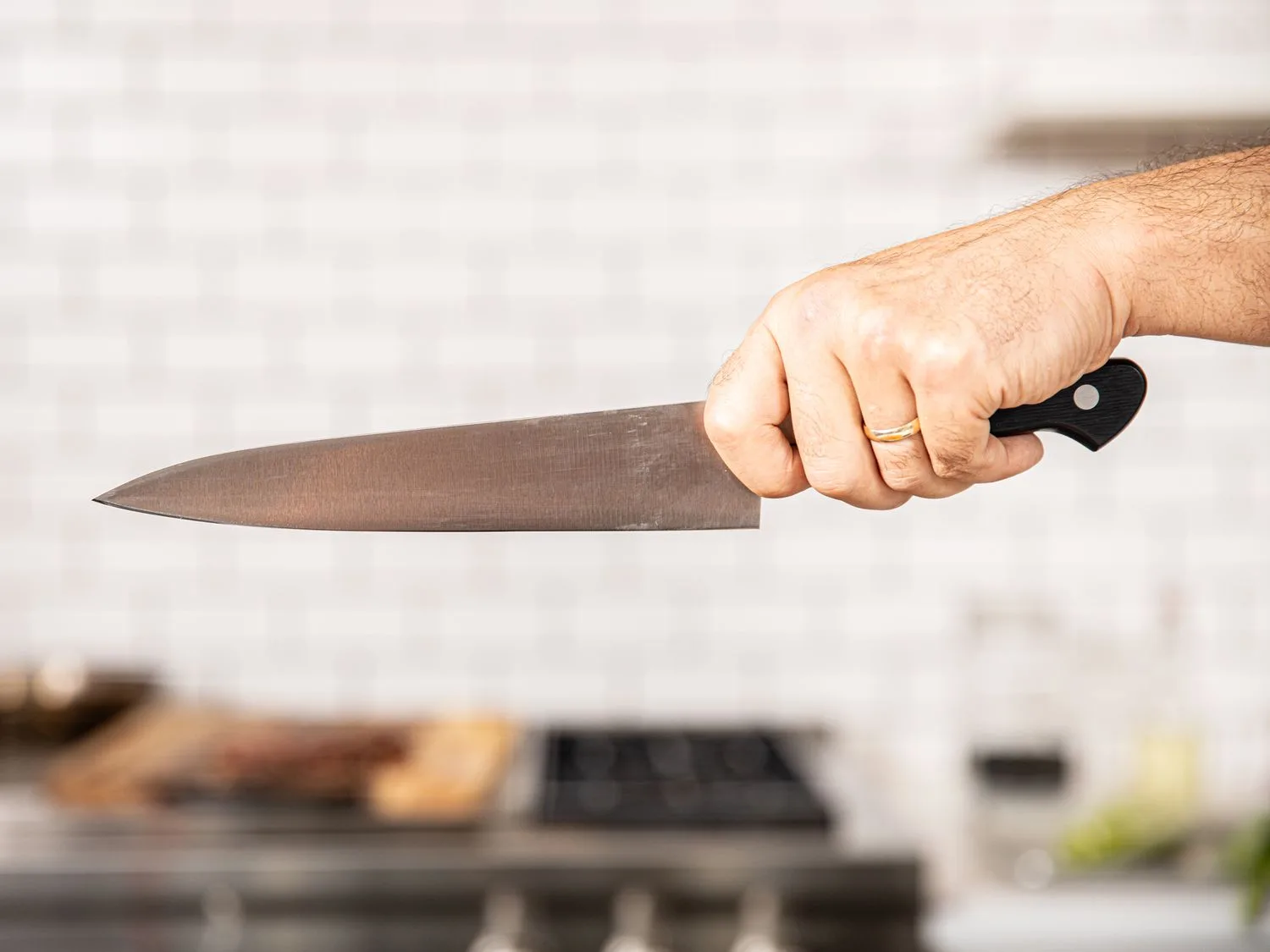
Students typically start with the fundamentals rather than jumping straight into rapid dicing. Before cutting anything, students learn a proper pinch grip and a guiding hand position designed to protect fingertips while giving maximum control over the blade.
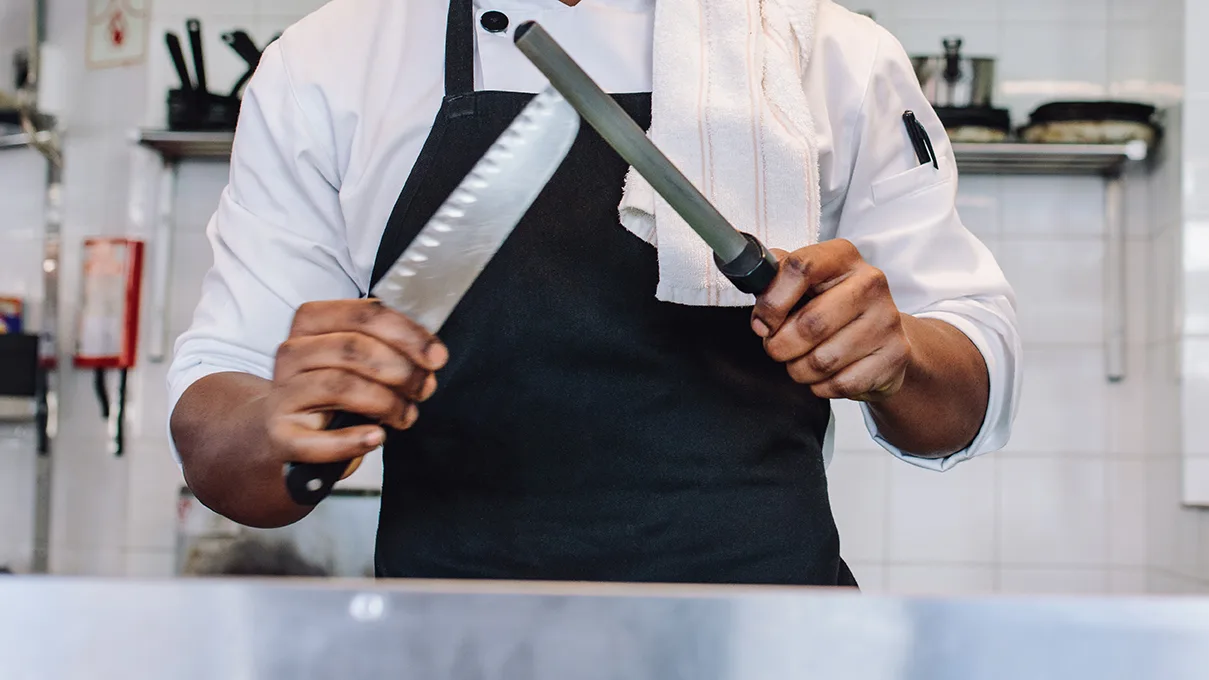
A dull knife is often more dangerous than a sharp one, since it requires more force and is more likely to slip. Students learn how to sharpen and hone their own knives so the tool performs consistently.
Only once grip and control feel natural do students begin working on rhythm and efficiency. Speed is treated as something that develops naturally through repetition, not something to chase early on.
What You’ll Practise in Those First Weeks
Early culinary training tends to focus on a set of foundational tasks that reappear constantly throughout a chef’s career.
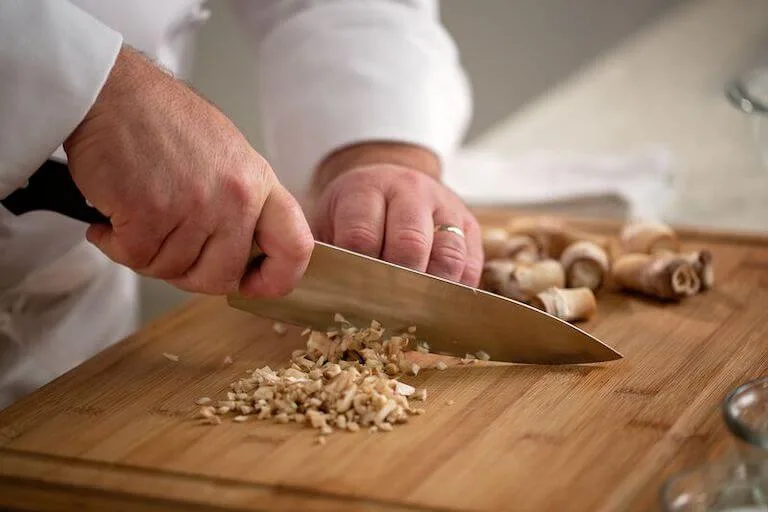
- Basic vegetable cuts: including dice, julienne and similar standard cuts that create uniform pieces for even cooking.
- Vegetable preparation skills: peeling, trimming and shaping ingredients cleanly and with minimal waste.
- Poultry handling techniques: such as trussing a chicken, which teaches precision and an understanding of how ingredients are broken down for cooking.
- Food safety habits: including proper cutting board hygiene and safe knife storage between tasks.
These tasks are repeated often, since consistency matters more than a single well-executed cut. Professional kitchens expect every piece of a diced vegetable to look the same, whether it is the first or the fiftieth.
Beginner Habits vs Professional Standards
Students often arrive with self-taught habits picked up from home cooking or online videos. Structured training at a culinary school usually reshapes these habits early, before they become difficult to unlearn.
| Area | Common Beginner Habit | What Training Reinforces |
|---|---|---|
| Grip | Holding the handle only, gripping tightly with fingers curled underneath | Pinch grip on the blade with a protective guiding hand |
| Cut consistency | Uneven pieces of varying size | Uniform cuts for even cooking and professional presentation |
| Sharpening | Rarely sharpened, or relying on others | Regular honing and sharpening as personal responsibility |
| Speed | Rushing to appear efficient | Control first, with speed developing gradually through practice |
How This Foundation Shapes Your Career
Knife skills do not stay contained to a single early module. They quietly support almost every technique that comes afterwards.
Sauces rely on evenly cut mirepoix cooking at the same rate. Braises and roasts depend on trimmed, well-prepared proteins.
Even pastry work, where precision cutting of fruit or garnish matters, draws on the same foundational control developed at the very start of training. In a professional kitchen, knife competence is also something chefs and instructors assess quickly.
It signals discipline, attention to detail and readiness for more demanding tasks. Students who invest genuine effort into their early knife training tend to move through later stages of a programme with more confidence, since the basic tool of the trade no longer requires conscious thought.
Ready to build this foundation for yourself? Visit Le Cordon Bleu Sunway to learn more about our culinary programmes.
Frequently Asked Questions
What are knife skills in culinary training?
Knife skills refer to the techniques used to hold, control and use a kitchen knife safely and effectively. This includes proper grip, cutting motion, sharpening and basic cuts such as dicing or julienning vegetables. In culinary school, these skills form the foundation for almost every other cooking technique students learn afterwards.
What is typically included in a knife skills module at culinary school?
Knife skills training generally covers proper grip and posture, blade sharpening and maintenance, basic vegetable cuts and foundational preparation tasks such as trimming and portioning ingredients. Some programmes also include poultry handling techniques like trussing. Exact content can vary between institutions and course levels.
Who benefits most from formal knife skills training?
Formal knife skills training suits aspiring professional chefs, career changers entering the food industry and enthusiastic home cooks who want to build genuinely reliable technique. It is particularly useful for anyone planning to work in a commercial kitchen, where speed, safety and consistency are expected from day one.
When should I start preparing before enrolling in a culinary programme?
There is no strict requirement to practise beforehand, since knife skills are usually taught from the very beginning of a programme. Familiarising yourself with basic kitchen safety and handling a knife at home can help you feel more comfortable once formal training begins.
How long does it take to become confident with knife skills?
Confidence with basic knife skills often develops within the first weeks of consistent, supervised practice, though true mastery takes considerably longer. Speed and effortless control tend to build gradually over months of repetition, both during formal training and in kitchen environments afterwards.
Is knife skills training really necessary if I already cook at home?
Home cooking experience is a helpful starting point, but it does not always include the safety habits, sharpening knowledge or cut consistency expected in professional kitchens. Many home cooks develop workable but imperfect habits that formal training helps correct.
What should I look for when choosing a culinary school for foundational training?
Look for a programme with a clear, structured curriculum that introduces fundamentals like knife skills early, supported by experienced instructors and genuine hands-on practice time. Consider the reputation of the institution, the depth of practical training offered and whether the programme provides a recognised qualification.
Why do knife skills culinary school programmes teach this before anything else?
Knife skills culinary school training comes first because nearly every recipe and technique that follows depends on safe, consistent cutting. Teaching grip, control and basic cuts early protects students once they progress to using stoves, ovens and other equipment.